Research and Development
Build Reactors. Test Fuels.
Mark I through Mark V. Each generation solves what the last one couldn't. The math is open, the work is documented, the failures are public.
I was fifteen when I watched a documentary in environmental science class about ocean plastic. It said less than three percent of plastic actually gets recycled. The video ended without offering a solution. That stayed with me.
Two years later, in welding class my senior year of high school, I started researching pyrolysis. I built my first reactor in my parents' backyard at seventeen. They were scared at first. Then they watched me keep going through five generations of failure.
Summer 2024 I had an explosion. Second-degree burns. Lost my build site. Relocated to Alabama, four-hour drive each way, almost every day. I kept building. Mark V is on the trailer now.
I started building reactors at seventeen. I didn't go to college. I'm a 776 Foundation Climate Fellow, a TEDx speaker, a Harvard iCreate invitee, and have been recognized by Doctor Bernice King at the MLK Junior Beloved Community Awards. Forbes, Newsweek, Fox News, The Weather Channel and Inc have all covered the work. None of that is the point.
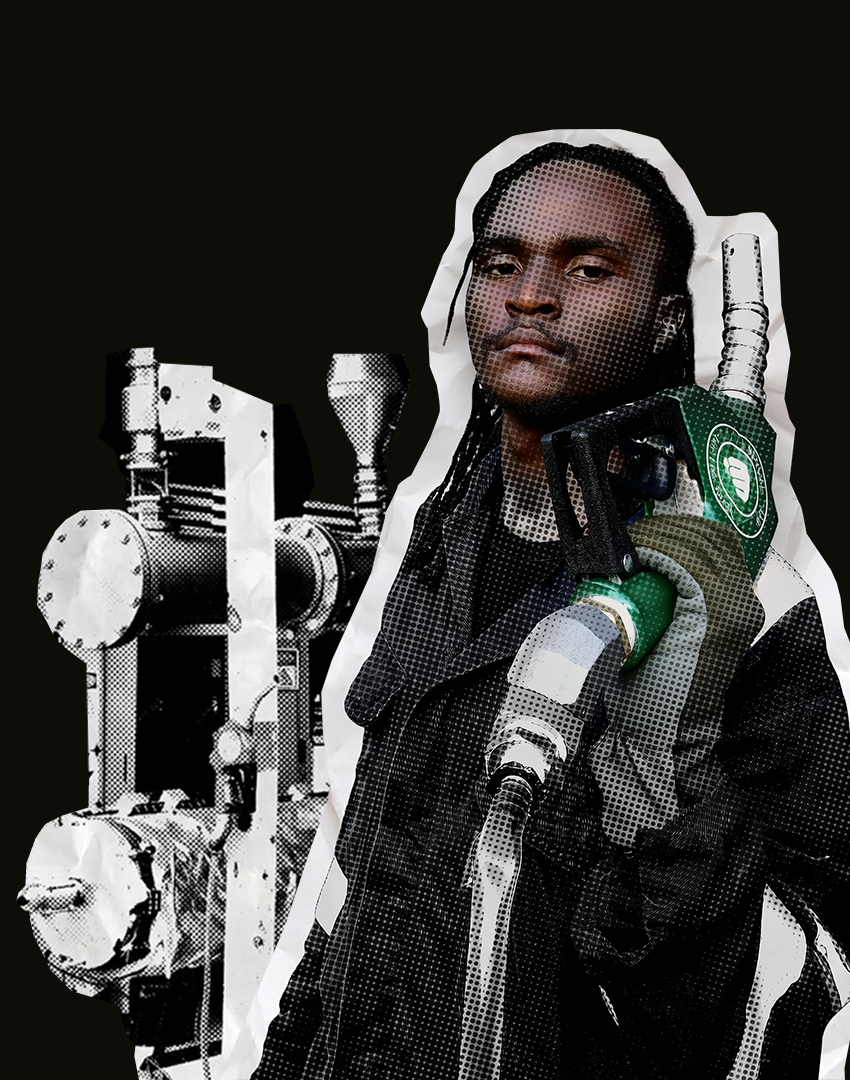
People ask me if turning plastic into fuel is counterproductive. Fuel burns. Burning produces emissions. So aren't I just trading one pollution for another?
I tell them no. The goal isn't fuel. The goal is the complete destruction of plastic. The fuel is what's left over.
Plastic in the environment produces uncontrolled microplastic and chemical emissions for centuries with no useful output. Controlled fuel combustion, by comparison, is measurably better. The math is settled.
Mark I through Mark V. Each generation solves what the last one couldn't. The math is open, the work is documented, the failures are public.
Vehicles fueled with Plastolene®. Trailer-mounted reactors that travel. Real combustion in front of real audiences. No simulations.
Showing kids what's possible from a backyard. The Mark V started in a parking lot. Anyone can start.
A closed-loop, solar-powered system that breaks plastic down to its molecular base and converts it into clean, high-performance fuel. Zero combustion. Zero emissions. Zero waste. 110 octane.
No pre-sorting. Bottles, bags, containers, packaging. Everything goes straight in.
Inside a sealed vacuum chamber, microwave energy breaks the molecular bonds of plastic. It decomposes into hydrocarbon vapor. Zero combustion. Zero emissions.
The vapor passes through a distillation column. It separates into gasoline, diesel, and jet fuel. 110 octane.
Every watt comes from solar. No grid dependency. No fossil fuel input. The system runs itself.
Plastolene is real. The reactor works. The mission is active. What I do next depends on what we can fund together.